
Thank you for Subscribing to Energy Business Review Weekly Brief
![JGC Holdings Corporation [TSE: 1963]: Engineering the Infrastructure of a Low-Carbon Future](https://www.energybusinessreviewapac.com/uploaded_images/Untitled-4-5lknr.jpg "JGC Holdings Corporation [TSE: 1963]: Engineering the Infrastructure of a Low-Carbon Future")
JGC Holdings Corporation [TSE: 1963]
Engineering the Infrastructure of a Low-Carbon Future
Energy transition projects are no longer limited by the availability of individual technologies. The greater challenge is connecting those technologies into systems that can operate reliably, compete economically and scale across industries. Across Asia-Pacific, organizations are balancing decarbonization objectives with energy security, creating demand for solutions that combine engineering expertise with practical project execution. JGC Holdings Corporation [TSE: 1963] brings decades of experience delivering complex energy infrastructure to this evolving landscape. The company applies its process engineering and project delivery capabilities across hydrogen, ammonia, carbon capture and renewable energy. Its work spans the decarbonization of existing energy assets through carbon capture and storage (CCS), blue hydrogen and fuel ammonia, while also advancing emerging areas such as offshore wind and small modular reactors (SMRs). Rather than focusing on individual technologies, JGC develops interconnected energy systems that link production, conversion, storage, transportation and end use. An Integrated Approach to Energy Transition JGC supports clients throughout the energy transition journey by combining engineering, procurement and construction capabilities with feasibility studies, technology development, commissioning, operations and maintenance. This approach allows the company to address challenges beyond construction by evaluating how new technologies can function within existing infrastructure, regulatory environments and commercial frameworks. Hydrogen and ammonia represent key areas of focus. While hydrogen offers a pathway toward lower-carbon energy, its widespread adoption depends on overcoming challenges related to storage and transportation. JGC views ammonia as a practical energy carrier because it can leverage existing handling and logistics infrastructure while enabling the movement of hydrogen-derived energy across regions. Through its AMUSE™ initiatives, the company develops solutions across ammonia production, utilization and supporting infrastructure.
![JGC Holdings Corporation [TSE: 1963] Engineering the Infrastructure of a Low-Carbon Future](https://www.energybusinessreviewapac.com/newstransfer/upload/october-november-apac-xc6ri-.jpg "JGC Holdings Corporation [TSE: 1963] Engineering the Infrastructure of a Low-Carbon Future")
Renewable Energy
Risk Solutions International and CQ Energy
Engineering Risk Transfer for a Changing Energy Market
Patrick Bourke, Director
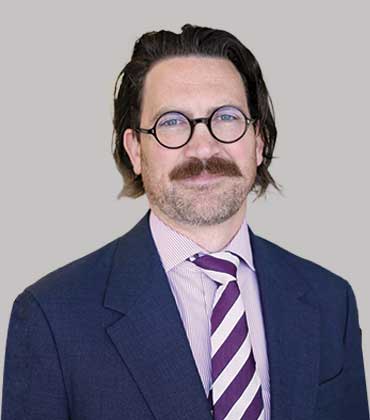
Australia’s evolving energy market is creating exposures that do not always fit established risk-transfer structures. Weather-driven volatility, new generation technologies and changing financing requirements are creating risks that must be understood at the market and asset level before they can be transferred. Risk Solutions International and CQ Energy owned by EnergyOne Ltd (ASX: EOL), have operated as a joint venture at the intersection of energy markets and alternative risk transfer since 2008. Together, RSI and CQ translate energy-market exposures into workable risk-transfer structures and connect clients with counterparties suited to the transaction. Their clients include power generators, retailers, commodity traders and independent power producers across Australia’s National Electricity Market. “We work closely with clients to structure transactions around what they actually require to manage risk, including the premium levels and limits they are working toward,” says Patrick Bourke, director at RSI..
WIND ENGINEERING CONSULTANT
CPP Wind Engineering Consultants
Where Wind Science Meets Renewable Energy Development
David Banks, President
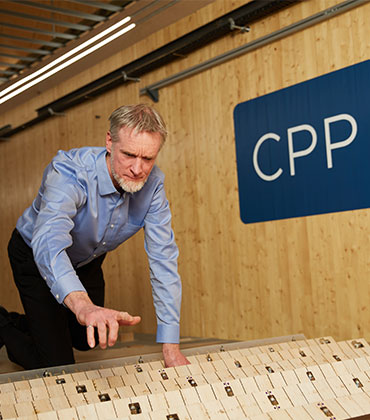
When the first solar farms began dotting the landscape, wind was often an afterthought. But CPP saw something others didn’t: the invisible wind forces shaping the future of renewable energy. Today, as the contribution of solar power to global energy demand rapidly grows, tracker systems become more complex, and climate patterns shift, the stakes have never been higher. That’s why CPP is constantly expanding its capabilities and service offerings for the solar energy industry. The team is pushing boundaries by investing in research, refining engineering test and analysis techniques, and asking hard questions about how these emerging technologies interact with wind. CPP Wind Engineering Consultants was an early pioneer in the emerging field of solar wind engineering, beginning in 2007, when the solar industry was still learning to adapt designs to the realities of wind. This early start enabled CPP to tackle challenges developers had not yet anticipated, from taming otherwise unstable behavior of long flexible tracker systems in gusty environments to optimizing fixed-tilt systems for minimal wind load. Today, CPP’s 15+ years of specialized research and hands-on project experience help clients design solar arrays that are both resilient and cost-effective, cementing its reputation as a leader in the field. Its work ensures projects meet technical and financial performance expectations while minimizing the longer-term risks of damage, downtime, and costly retrofits. The company’s capabilities extend beyond direct solar equipment testing within the laboratory to other solar plant design optimizations, such as full climate analysis studies, snow loading, sand drifting, topographic wind studies, and even full-scale field monitoring of wind loads and effects on PV systems. These projects all require the same disciplined approach: detailed wind analysis that considers the specific environment and conditions of each site. Rather than offering generic testing, CPP acts as a true partner, integrating its recommendations into a client’s broader engineering and business objectives. “When people come to us, it’s because their project’s success hinges on ensuring wind stability and cost effectiveness. That responsibility is something we take seriously every single day,” says Oliver Napp, CEO.
VIRTUAL PIPELINE & CNG GAS DELIVERY SERVICES
Plum Gas Solutions
Uncompromised Reliability for the Future of Digital Power
Kehau Kincaid, Chief Operating Officer
Natural gas is emerging as the most pragmatic answer to surging energy demands of AI and cryptocurrency. Abundant, flexible, cost-efficient, and environmentally preferable than other fuels, it offers the reliability and scalability required by digital infrastructure today. The real challenge, however, is not in recognizing natural gas as the solution. It is in delivering it through systems engineered for mission-critical environments, like data centers, financial platforms, and advanced computing hubs that operate on a zero-downtime mandate. They cannot afford energy strategies that fail to scale, compromise resilience, or fall short of sustainability targets. Designing natural gas solutions that integrate efficiency, resilience, and environmental performance is the next frontier. That’s Plum Gas Solutions’ playing field, where the operating standard is ‘non-negotiable reliability.’ Plum designs, engineers, manufactures, and deploys proprietary natural gas systems, specializing in customized Pressure Regulation Systems (PRS) for last-mile delivery to power data centers and industrial operations. These trailer-mounted systems operate safely, efficiently, and without external power, with SCADA-based remote monitoring. Plum also enables flexible natural gas supply through virtual pipeline deployments, CNG and RNG tube-trailer delivery, fuel gas cleanup, custom manifolds, logistics, and full EPC and project-management services. These solutions support applications ranging from e-fracs and remote power to industrial fuel switching and renewable natural gas distribution. “Our mobile natural gas systems are deployed at hyperscale sites, in support of AI data center turbine fleets, deliver high-volume, precision regulated gas flow,” says Kehau Kincaid, chief operating officer. “With cloud-based monitoring and rapid startup capabilities, they maximize uptime and reduce operational risk.” Engineered for Flexibility, Proven for Reliability Plum’s equipment packages, produced in Alberta, Canada, are designed with the operator in mind—simple, durable, and dependable. Its flagship product, PRS, is designed to precisely control the pressure and temperature of gas streams. These systems take gas delivered at high pressure, step it down, add controlled heating, and ensure it reaches power generation equipment at the exact specifications needed for smooth, efficient operation. Available in a broad spectrum of sizes, pressure regulation units are capable of handling flow rates from as low as 500 thousand standard cubic feet per day (SCFD) up to 6.5 million SCFD.

Energy Consulting

Recognizing the Unsung Warriors
Moses Thompson, President, Liberty
Battery Manufacturing

Creative Procurement Solutions
Ken Jones, Senior Director of Business Services, EPB
Renewable Energy

Risk Mitigation With Consistent Data Management
Roy Hock, MBA, ARM, Director of Risk Finance and Casualty Insurance, Valero Energy Corporation
Battery Manufacturing

The Katanes Green Ammonia Project
Dr. Tryggvi Thor Herbertsson, Global Head of Hydrogen Strategy and Partnership, Qair Group
Battery Manufacturing

Strengthening Customer Relationships in Energy Services
Valerie Eden, Vice President of Customer Experience, ThompsonGas

IN MY OPINION
Energy Storage
Increasing Circularity Of The Cooling And Refrigerants Industry
Jamie Ross, Operations Director APAC, A-Gas

LAST WORD
Battery Storage
Why Adopt Operational Readiness For Your Projects?
Greg Roberts, Asset Management Lead, Verbrec Ltd [ASX: VBC]
IN FOCUS

Strengthening Resilience with Energy Alternative Risk Transfer Solutions in APAC
Energy alternative risk transfer solutions are becoming a crucial allowing company to customize financial protection based on their operating and strategic goals.

Renewable Energy Recruitment Agencies Supporting APAC's Energy Transition
Renewable energy recruiters connect skilled talent with accelerating clean energy projects across APAC markets.
EDITORIAL
Building the Infrastructure behind the Energy Transition
Turning energy transition goals into practical results takes more than developing new technologies. It requires the right infrastructure, strong operational systems and partnerships to use those technologies at scale. Across APAC, energy companies are developing these capabilities while balancing decarbonization with reliable operations and longterm investment. This issue of Energy Business Review APAC examines the organizations helping turn transition strategies into practical outcomes.
Our cover story features JGC Holdings Corporation [TSE: 1963], recognized as the Top Energy Transition Services in APAC 2026. The company is approaching the energy transition as an engineering challenge that requires integration across the entire value chain. By combining engineering, procurement and construction capabilities with feasibility studies, technology development and project execution, JGC is helping organizations move emerging energy solutions from concept toward commercial deployment.
Also recognized is Risk Solutions International and CQ Energy as the Top Energy Alternative Risk Transfer Solution in APAC 2026. The firm works with generators, retailers, commodity traders and independent power producers to design risk-transfer solutions around specific exposures, including generation, commodity and weatherrelated risks. Its approach reflects the changing nature of energy markets, where new asset classes and evolving technologies require more flexible financial structures.
The issue also features perspectives from leaders addressing the operational side of transformation. Jamie Ross, Operations Director APAC at A-Gas, discusses how refrigerant recovery, reclamation and lifecycle management can support a more circular cooling industry. Greg Roberts, Lead Asset Management Engineer at Verbrec Ltd [ASX: VBC], highlights why operational readiness must begin early in project development to ensure the right systems, processes and resources support infrastructure.
Behind every successful energy transition is a combination of vision, discipline and the ability to execute in changing environments. The companies and leaders featured in this issue provide insight into how the industry is adapting to new demands while building the foundations for future growth. We invite our readers to explore these perspectives and the strategies shaping the future of energy.
