
Thank you for Subscribing to Energy Business Review Weekly Brief
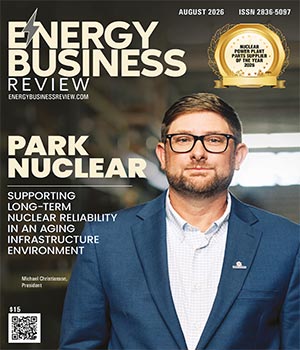
Park Nuclear
Supporting Long-Term Nuclear Reliability in an Aging Infrastructure Environment
The US nuclear industry is operating under a very different set of pressures than it was twenty years ago. Park Nuclear sees that shift firsthand through utilities trying to keep older infrastructure operating far longer than originally planned. Some plants are extending reactor lifespans while others are restarting retired facilities or preparing for new reactor programs. At the same time, many of the manufacturers and supplier networks tied to legacy nuclear infrastructure have either narrowed their nuclear focus or exited the market entirely. Inside plants, the challenges are immediate and operational. Replacement parts are becoming harder to secure while lead times continue to stretch. Engineers are working around systems installed decades ago, often with limited vendor support and incomplete historical documentation. Procurement teams are balancing outage schedules, regulatory expectations and supply-chain uncertainty at the same time, leaving very little room for delay when critical equipment fails. That environment is where Park Nuclear built its business. Founded in 1988, the company focuses on obsolete components, unsupported systems and nuclear sourcing problems that emerge after conventional procurement channels stop producing viable answers. Utilities often contact Park Nuclear when OEM support disappears, outage windows tighten or a failed component begins threatening operational continuity. In nuclear operations, however, finding a replacement part is only one part of the challenge. Qualification history, traceability, testing records and regulatory documentation matter just as much as the component itself. A technically compatible part without defensible documentation can still create engineering exposure, compliance complications and additional outage risk. From its 125,000-square-foot facility in Pasco, Washington, Park Nuclear maintains more than 350,000 parts connected to legacy nuclear infrastructure across North America, including original unused equipment no longer available through standard commercial channels. During outages, access to that inventory can determine whether utilities maintain schedules or absorb costly delays across plant operations.
Nivalis Energy Systems
Advancing Electric Refrigeration for Modern Cold-Chain Logistics
Sam Plunkett, Chief Executive Officer
Cold-chain operators are under increasing pressure to reduce fuel costs, meet emissions targets and maintain reliable refrigeration performance across demanding transport environments. Nivalis Energy Systems solves a challenge many fleet operators continue to face: adopting electrified refrigeration systems without sacrificing reliability, scalability or cost competitiveness. “We deliver an electric solution that provides an economic benefit to customers versus diesel and provides performance capabilities equivalent to or better than diesel systems,” says Sam Plunkett, chief executive officer. Nivalis developed its TRU-POWER® system specifically for battery-electric transport refrigeration applications. Rather than relying heavily on non-optimized off-the-shelf components, Nivalis engineered advanced battery and power electronics systems designed around the operational requirements of refrigerated fleet operators. The design strategy focused on reducing total cost of ownership while maintaining the usability, serviceability and reliability fleet operators expect from diesel-powered refrigeration units. Nivalis also structured the system around modular installation requirements, allowing trailers to be outfitted and returned to service within two days through its nationwide dealer and installer network. It believes minimizing installation downtime is essential for broader fleet adoption because operators remain highly sensitive to disruptions affecting route schedules and equipment availability..

Energy Consulting Services

For industrial and energy-related sectors, sustainability is a marathon run uphill. The finish line is clear, but the route is full of (un)expected budget overruns, project timeline detours, stalled execution, and strategy fatigue roadblocks. The cost of going green and staying green is often miles apart, making sustainability a balancing act between ideals and bottom lines. In these high-stakes environments, BARA Consultants steps in as a trusted coach who can turn messy realities into measurable wins. It specializes in helping industrial plants and energy operators shift to clean energy through innovative solutions in combustion, biomass, waste-to-energy, and technology development. “Our purpose is to empower every industrial plant to operate in a technically optimized and financially efficient way, enabling them to achieve their sustainability goals,” says Werner Botha, CEO. Rooted in this mission, BARA delivers tailored optimization solutions across all industrial plants, with specialized expertise in the thermochemical and power industries. It helps clients enhance their current systems and address inefficiencies by conducting process evaluations and implementing corrective measures. Whether it involves adjusting process parameters, upgrading equipment, or identifying governance issues, the company guides clients step by step, ensuring the recommended processes are both cost-effective and high-performing. BARA extends its expertise through consultative services in the biomass-to-energy sector, turning waste into valuable feedstock. The journey begins with due diligence and technology selection, followed by small-scale tests to assess feasibility and analyze feedstock quality and quantity. This thorough evaluation lays the groundwork for successful industrial-scale production. Throughout the process, BARA provides hands-on guidance to ensure every insight is translated into practical and implementable solutions. Following the evaluations, the company prepares a pro forma and economic model to recommend the most suitable technology route, like combustion, pyrolysis, or gasification. It even provides an initial consultation to guide clients forward, assessing their carbon intensity scores to enhance eligibility for tax incentives or carbon credits.
Top Turnkey Energy Storage Solution 2026
GridVest
Simplifying Energy Storage Deployment through Flexible Procurement
Alex Shoer, Co-Founder and Managing Partner
Commercial and industrial energy users are increasingly facing limited grid capacity, lengthy interconnection timelines and rising electricity costs. Those constraints often delay expansion plans and make energy planning more difficult. GridVest built its turnkey battery energy storage offering around helping developers, EPCs and energy users deploy storage systems faster while navigating sourcing, financing and implementation challenges. “Rather than forcing projects into a single vendor ecosystem, we help assemble the right technology stack for each project,” says Alex Shoer, co-founder and managing partner. GridVest operates as a battery energy storage system distributor and solutions provider supporting projects from sourcing and procurement through commissioning and deployment. Its model combines equipment sourcing, vendor coordination, financing support and technical guidance into a single process designed to reduce complexity across battery storage projects. A key differentiator is the company’s brand-agnostic approach. GridVest works directly with multiple Tier 1 battery, inverter and energy management system providers in the United States and internationally. This allows developers and EPCs to select technology combinations that align with project requirements while still benefiting from coordinated procurement and implementation support. The company also bundles batteries, inverters and energy management systems into one purchasing process, helping simplify supply chain coordination and project execution.

Pipeline

Maintaining Pipeline Integrity
Charles E Venditti, Pipeline Integrity Manager, TRC Companies
Energy Engineering

Championing Strategic Leadership in Water and Forest Sustainability
Elvy Barton, Water and Forest Sustainability Senior Manager, Salt River Project
Oil and Gas

Energy Transition In The Natural Gas Industry
Terry Kreuz, Managing Director of Energy Transition, National Fuel Gas Company [NYSE: NFG]
Energy Consulting

Modernizing the Grid Isn’t Optional—It’s Inevitable
Rick Joyce, Vice President of Business Development - Grid Modernization, Mitsubishi Electric Power Products
Energy Infrastructure

Unlocking the Future of Batteries
Nicholas Grundish, VP of Battery Technology, EnergyX

IN MY OPINION
Energy Consulting
Coordinating Operational Growth, Compliance And Safety
Lon Bartoli, Head QHSE, Risk Management, InCharge Energy

LAST WORD
Energy Extraction
Scaling AI across the Energy Enterprise
Iddo Salton, VP Innovation, Data & AI, Delek US
IN FOCUS

Compliance and Continuity: Key Drivers in Nuclear Supply Excellence
Nuclear power plant parts suppliers are strengthening relevance through disciplined manufacturing, digital compliance, and long-term alignment with extended reactor operations.

Modernizing Energy Infrastructure: Effective Transmission Procurement Strategies
Transmission procurement services improve sourcing efficiency, supplier management, cost control, and project execution for reliable infrastructure development.
EDITORIAL
Powering Reliability in a Changing Energy Landscape
The energy sector is adapting to a changing reality. Aging infrastructure must remain reliable, cleaner technologies are moving into everyday operations and digital tools are improving how critical assets are managed. In this edition of Energy Business Review, we showcase the companies and leaders helping the industry meet these demands with practical solutions, technical expertise and a clear focus on long-term performance.
Leading this issue is Park Nuclear, recognized as the Nuclear Power Plant Parts Supplier of the Year 2026. As nuclear facilities extend operating lifespans and legacy equipment becomes harder to replace, the company helps utilities maintain reliability with specialized sourcing, engineering support and rigorous quality assurance. Its ability to solve complex obsolescence challenges while meeting strict regulatory standards has made it a trusted partner for nuclear operators across North America.
This edition also features Nivalis Energy Systems, recipient of the Top Advanced Battery Electric Transport Refrigeration Solution 2026 award. Its battery-electric refrigeration platform helps fleet operators reduce fuel use, lower maintenance costs and transition to cleaner transport without compromising performance or reliability. The company’s work shows that sustainability and operational efficiency can move forward together.
Our CXO section features Iddo Salton, VP Innovation, Data & AI at Delek US, who explains why successful AI initiatives begin with solving real business problems and scale through disciplined execution. We also hear from Lon Bartoli, Head QHSE, Risk Management at InCharge Energy, whose insights highlight the importance of embedding safety, compliance and risk management into daily operations rather than treating them as separate priorities.
We invite you to explore this edition of Energy Business Review and discover how today’s innovators are strengthening reliability, advancing cleaner technologies and preparing the energy industry for the future.
