
Thank you for Subscribing to Energy Business Review Weekly Brief
A featured contribution from Leadership Perspectives, a curated forum for energy sector leaders across utilities, oil and gas, and power generation, nominated by our subscribers and vetted by the Energy Business Review Editorial Board.

Battery Value Chain Xchange USA 2026: Preliminary Agenda Highlights the Five Pillars Driving the Future of the Battery Industry
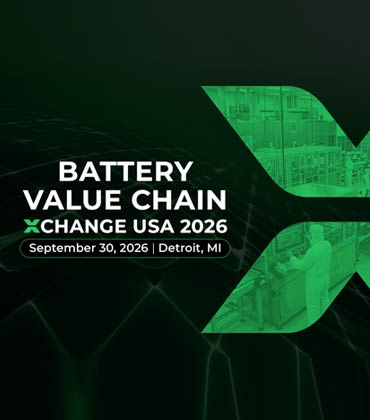
As North America's battery industry enters a period of unprecedented growth, Battery Value Chain Xchange USA 2026 has released its preliminary agenda, bringing together leaders from across the battery ecosystem to address the opportunities and challenges shaping the next generation of energy storage and electric mobility.
Hosted by Thought Xchange Network, the conference is designed around five strategic themes that are defining the future of the battery industry: Critical Minerals & Raw Materials, Battery Manufacturing & Gigafactories, Battery Recycling & Circularity, Battery Technology & Chemistry Innovation, and Policy, Investment & Supply Chain Resilience.
With demand for batteries continuing to surge across electric vehicles, stationary energy storage, and industrial applications, the conference will provide a platform for senior executives, policymakers, technology innovators, investors, and end-users to exchange practical insights and strategies for building a competitive, secure, and sustainable battery value chain.
Exploring the Five Pillars of the Battery Value Chain
The preliminary agenda features expert-led discussions focused on the most pressing challenges and opportunities facing the industry today.
Critical Minerals & Raw Materials
As governments and manufacturers seek to reduce supply chain vulnerabilities, industry leaders will examine strategies for securing sustainable and diversified supplies of lithium, nickel, graphite, cobalt, manganese, and emerging battery materials. Sessions will explore domestic production, refining capacity, responsible sourcing, and geopolitical considerations impacting global supply chains.
Battery Manufacturing & Gigafactories
The rapid expansion of battery manufacturing capacity continues to reshape the North American industrial landscape. Delegates will gain insights into gigafactory development, production scaling, automation, quality control, workforce development, and operational best practices for achieving long-term competitiveness.
Battery Recycling & Circularity
As battery deployment accelerates, recycling and material recovery are becoming increasingly important components of the value chain. The agenda will explore advancements in recycling technologies, closed-loop supply chains, second-life battery applications, and strategies for maximizing the recovery of valuable materials.
Battery Technology & Chemistry Innovation
Innovation remains a key driver of industry growth. Experts will discuss developments in lithium iron phosphate (LFP), lithium manganese iron phosphate (LMFP), sodium-ion batteries, solid-state technologies, silicon-anode solutions, and other emerging chemistries that could transform future battery performance, cost, and sustainability.
Policy, Investment & Supply Chain Resilience
The battery sector continues to be shaped by evolving regulations, government incentives, trade policies, and investment activity. Sessions will examine how organizations can navigate changing policy environments, attract capital, strengthen supply chain resilience, and capitalize on new market opportunities.
Final Call for Speakers
While the preliminary program is now live, the conference committee is currently reviewing applications for the remaining speaker positions.
The Call for Speakers remains open for a limited period, and industry leaders, technology innovators, manufacturers, recyclers, policymakers, researchers, and end-users are invited to share practical case studies, lessons learned, and forward-looking perspectives across the conference's five core themes.
Bringing the Battery Ecosystem Together
Battery Value Chain Xchange USA 2026 is designed to facilitate collaboration across the entire battery lifecycle- from mining and raw material processing through cell manufacturing, battery deployment, recycling, and material recovery.
By connecting stakeholders from across the industry, the conference aims to accelerate innovation, strengthen supply chains, and support the development of a resilient and sustainable battery ecosystem capable of meeting the growing demands of the global energy transition.
The articles from these contributors are based on their personal expertise and viewpoints, and do not necessarily reflect the opinions of their employers or affiliated organizations.
