Christos Kolliatsas
Christos Kolliatsas is Technical Director for Clean Energy EMEA at Wood, leading the delivery of renewable projects and innovation programs that support clients on their net-zero journey. With over 20 years of experience, he previously held senior roles leading technical due diligence on over £20 billion in transactions and served as an Owner’s Engineer across offshore wind, renewables and gas power. He brings a pragmatic, delivery-focused approach shaped by deep field experience and cross-sector insight.
Through this interview, Kolliatsas highlights how clean energy progress relies on practical leadership, local execution and the ability to align ambition with on-the-ground realities.
Balancing Global Ambition with Regional Realities
Global targets help set direction, but the reality of clean energy is built project by project, each in its context. From my observation, what worked well for a project in one location rarely fits elsewhere without adjustment. Every site brings physical, regulatory and logistical conditions and you must tailor your approach.
We don’t talk about decarbonization as a separate goal in renewables. The projects are decarbonization. But that doesn’t mean we ignore the impact. Even in clean energy, we must stay conscious of lifecycle emissions, especially during construction and manufacturing. Minimising that footprint is part of the job.
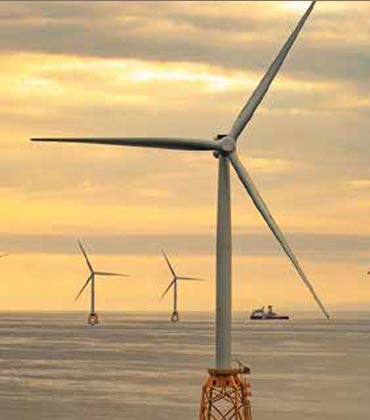
Offshore wind has taught me a lot about how different regional conditions shape what’s possible. The North Sea gave us a relatively straightforward sandbox: shallow waters, “simple” seabed and a mature supply chain. But when we moved to Taiwan, Japan and the United States, everything changed. Deeper waters, more complex ground conditions and limited local capacity for trained people, vessels and even basic infrastructure are also factors.
In those markets, we couldn’t just build. We had to start by transferring knowledge; training local teams, working with new suppliers and navigating permitting frameworks that weren’t always in place. The technical design is only part of it. Timelines, procurement models and even delivery expectations need to shift.
What looks like a straightforward rollout in one place often requires a complete rethink elsewhere. Energy transition comes down to setting goals and building things with what’s available in your standing conditions.
Dealing with Grid Limitations Early
Grid connection is one of the first things to look at. You can have the best wind or solar profile on paper, but the project will fail without a viable export point.
Finding where the grid can realistically absorb new power is challenging in most places. Projects require to identify early where capacity exists, what upgrades might be needed and whether those upgrades are worth the effort and investment. Sometimes, that may mean having to walk away or relocate sites entirely.
This kind of grid analysis is a part of nearly every project I’ve worked on. It’s not just about finding a good generation site. It’s about lining that up with export capability. If those two don’t connect, the project doesn’t move.
Addressing this early can save projects from costly delays and redesigns. It’s one of those areas where good technical planning directly affects whether the business case holds.
Finding where the grid can realistically absorb new power is challenging in most places. The project requires identifying early where capacity exists, what upgrades might be needed and whether those upgrades are worth the effort and investment.
Closing the Talent Gap in Clean Energy
The skills gap continues to slow things down in two areas: power electrical engineering and offshore wind experience, especially in newer markets and deeper waters.
That’s why there’s been such a strong push to retrain people from oil and gas. The core capabilities are already there and much of that experience can be applied directly to renewables. It’s faster to build capacity than to rely only on new graduates.
But even beyond those two roles, the bigger issue is scale. We just don’t have enough experienced professionals to deliver the number of projects that are now being planned. The ambition is there, but the workforce isn’t. That will be one of the biggest constraints over the next few years.
Where Innovation Stands in Floating Wind and Hydrogen
Floating wind is an option for offshore wind because we’re moving into deeper waters where fixed-bottom foundations are not viable. However, there is still a lot to prove about the technology. Right now, there are too many competing concepts. Eventually, the industry will need to narrow it down to a few that can be industrialised. Until that happens, floating wind will move at a slower pace than people expect.
There are also logistical bottlenecks. Building floaters takes up a lot of quay space and maintenance becomes more complicated once deployed. Some developers are looking at ways to extend fixed-bottom foundations into deeper waters. I’ve seen a few designs that might work, but they’re still in the early stages.
Hydrogen faces a different kind of challenge. Technically, we can do it. But financially, the models still don’t stack up. There’s been a lot of energy around green and blue hydrogen, but several big players have already delayed their plans. These projects may take longer to become commercially viable than the industry first hoped.
In general, I’m now seeing more focus on safer, more proven approaches. Teams are leaning toward reliability and repeatability over novelty. With the financial and geopolitical headwinds we’re facing, that makes sense.
Why Realism Matters More Than Optimism
A few years ago, I raised concerns about how fast offshore wind targets were being pushed and whether the supply chain could support the timelines. Unfortunately, some of that played out. Several governments have scaled back their plans or moved the timelines out.
Ambitious announcements are easy to make. But without grid access, a trained workforce and the right delivery partners, they don’t hold. Policy only works if the delivery side is ready.
I’m not against ambition. I think we need it. But I’ve also learned that it doesn’t lead to results if you don’t pair it with realism. Many developers now focus on what can be delivered. That may mean fewer innovation plays in the short term, but it’s helping the sector stay grounded and move forward.
If this transition is to work, we need more than plans and targets. We need execution that fits the reality we’re working in.