
Thank you for Subscribing to Energy Business Review Weekly Brief
![ØRSTED [CPH: ORSTED]: Leading Offshore Wind Through Integrated Execution](https://www.energybusinessreviewapac.com/newstransfer/upload/4-25t.jpg "ØRSTED [CPH: ORSTED]: Leading Offshore Wind Through Integrated Execution")
Europe’s energy transition is increasingly being shaped by offshore wind as a reliable, large-scale source of power. Within this shift, Ørsted develops, builds and operates offshore wind farms through a single, integrated model that connects project development with long-term performance. The ability to generate large volumes of electricity close to major coastal demand centres has made offshore wind indispensable, and Ørsted has played a defining role in turning it into a repeatable, infrastructure-scale deployment. Building Offshore Wind as an Integrated System Ørsted’s business is anchored in the full lifecycle of offshore wind farms, covering development, engineering, construction, ownership and operations. Each phase is managed as part of a continuous system rather than a sequence of independent steps. Early decisions around site selection, turbine configuration and grid connection are made with long-term performance in mind, shaping how assets operate over decades. Project development begins with identifying suitable offshore locations, assessing wind resources and working through regulatory processes with national authorities. These stages determine the technical and economic viability of each project. Once approvals are secured, execution moves into construction, where the complexity increases significantly. Offshore installation requires specialised vessels, precise coordination and careful planning around weather conditions and supply chain logistics. Offshore wind farms are monitored through centralised systems that track turbine performance and enable predictive maintenance. Continuous oversight helps maintain high availability, which is essential for supplying stable power to the grid. Electricity generated from these assets is sold through a combination of long-term agreements and market-based mechanisms, providing revenue visibility while supporting system integration. Continuity across these stages allows Ørsted to maintain control over performance, cost and risk. Each project contributes to a broader operating model where lessons learned are applied to subsequent developments, strengthening consistency over time. Scaling through Standardisation and Strategic Positioning Consistency in execution has enabled Ørsted to scale offshore wind across multiple regions. Standardisation plays a central role in that process. Installation techniques, project frameworks and design elements are refined and applied across offshore wind projects, reducing variability and improving efficiency. Repetition makes complex offshore builds more predictable, even as project sizes increase. Supply chain relationships are structured to support this approach. Long-term partnerships with manufacturers and service providers enable coordinated delivery across multiple offshore wind projects, reducing delays and supporting cost control. As offshore wind farms grow in scale, maintaining alignment across suppliers becomes increasingly important.
![ØRSTED [CPH: ORSTED]: Leading Offshore Wind Through Integrated Execution](https://www.energybusinessreviewapac.com/newstransfer/upload/3-jla7d-.jpg "ØRSTED [CPH: ORSTED]: Leading Offshore Wind Through Integrated Execution")
Top Energy EPC Contractor In UK 2026
What challenges create uncertainty in modern energy infrastructure project delivery today? Uncertainty defines energy infrastructure delivery. Grid requirements shift mid-project. Supply chains tighten. Skilled labour remains constrained. In complex infrastructure delivery, coordination risk often increases when responsibilities are distributed across contractors operating on separate timelines and incentives. Misalignment compounds. Escalation follows. Legal departments become involved in issues that began as coordination gaps. How does Gemec’s integrated model prevent coordination failures and project escalation risks? Gemec is structured to prevent that progression. The company positions itself first and foremost as an engineering firm. It retains 100 percent control of the project lifecycle—from design and procurement to construction, grid coordination and long-term operation. Responsibility does not transfer between silos; it remains continuous. When one segment slows, teams are reallocated internally. When grid requirements change, the engineers who designed the system resolve the issue. Grid studies are performed in-house, and protection schemes are aligned during design rather than deferred to energisation. “We have a holistic approach. Everything in-house gives us 100 percent control over the process and eliminates many of the uncertainty factors present in today’s market,” says Vassilis Thomas, CEO and Technical Director. For Vassilis, lifecycle control functions as a dispute-prevention mechanism. “You have to avoid at all costs finding yourself discussing with the client’s lawyers.” Legal escalation signals upstream engineering misalignment. Clear scope definition, early development involvement and integrated oversight are designed to prevent contractual friction before construction begins. Delivery discipline is measured by how ra.
Scale Solar Park Development Company

Hungary today stands at the forefront of Europe’s solar transformation. Strong irradiation, favorable landscapes, and an ambitious national energy strategy have made the country one of the continent’s fastest-growing clean-electricity producers. Behind this momentum is SolServices Kft., a developer whose work demonstrates that the next generation of solar parks can generate far more than power. They can restore landscapes, support biodiversity, and strengthen communities — becoming long-term assets in every sense. SolServices’ portfolio reflects both scale and intention: over 1000 MW of solar capacity developed, 206 MWp in operation, 88 MWp under construction, and similar quantity progressing through the development pipeline, accompanied by emerging wind and battery-storage projects. Yet the company’s defining contribution lies not only in megawatts delivered, but in the model it has established for nature-inclusive solar development — a model increasingly relevant as Europe reshapes its environmental and energy policies. At Lumen Park Szolnok, a 138-megawatt flagship project built on land previously shaped by intensive agriculture, this philosophy is visible in practice. The site generates significant clean power for the national grid while also demonstrating measurable improvements in vegetation cover, plant diversity, and habitat structure. These positive ecological trends arise from a development process that integrates ecological understanding from the earliest concept through long-term operation. Grounding Solar in Ecological Reality SolServices bases its work on a simple insight: land is not an empty surface for infrastructure — it is a living system that responds to how it is treated. To give structure to this perspective, the company created the Next Generation Solar Park Guide, Hungary’s first integrated ecological planning framework for utility-scale solar. Since its release, the guide has been downloaded by specialists across Europe and overseas, reflecting widespread interest in a more land-responsive approach to renewable energy.
Top Utility Rate Management Service in Europe 2026
Many organizations struggle to understand what truly drives their energy costs. Utility bills often include multiple components beyond supply rates, including capacity charges, demand charges and tariff structures that significantly impact total spend. Without clear visibility, businesses are left reacting to fluctuations rather than managing energy as a controllable expense. Summit Energy Solutions addresses this challenge by focusing on education and long-term strategy instead of transactional purchasing. Its approach centers on helping clients understand how usage patterns interact with tariffs, market conditions and regulatory changes. “Our role is to act as an advisor that helps clients understand the structure behind their utility costs so they can make informed decisions,” says Jack Regan, owner. Moving Beyond Transactional Procurement A common issue for commercial and industrial users is reliance on short-term pricing decisions without understanding long-term cost drivers. Contracts are often structured without considering f lexibility, risk exposure or future volatility, leaving organizations vulnerable to rising costs. Summit Energy Solutions takes a data-driven approach by analyzing consumption patterns alongside tariff structures and wholesale market trends. Instead of presenting the lowest available rate at a given moment, it develops procurement strategies that consider timing, operational risk and cost stability. This approach enables organizations to shift from reactive purchasing to structured planning. By understanding how different cost components interact, clients gain the ability to make decisions that align with both current needs and future conditions. Structuring Cost Control through Analysis The company’s methodology is built around four components: analysis, strategy, execution and ongoing management. It begins with a detailed review of billing structures, historical usage, demand patterns and supplier contracts to establish a clear baseline.
CXO INSIGHTS
Leading Innovation in Renewable Energy
Alexander Vogt, Head of Metering Services, LichtBlick SE
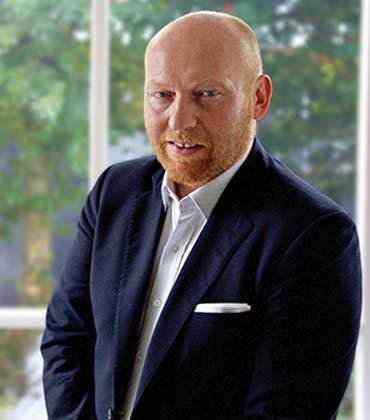
Ushering a New Era of Renewable Energy
Tryggvi por Herbertsson, Global Head of Hydrogen Strategy and Partnership, QAIR Group
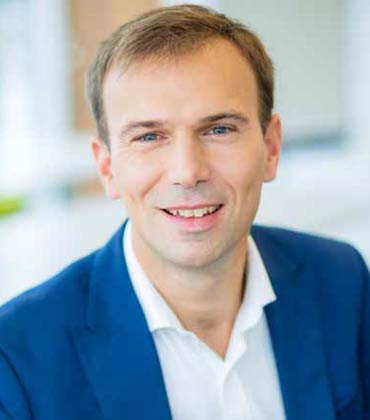
Delphy Underground Storage System: The Right Fit for Green Hydrogen Market Needs
Vincent Designolle, Director of Delphy Hydrogen Storage, Vallourec
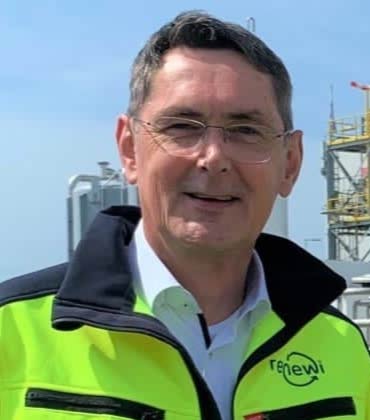
Boosting the Shift from Waste to Energy
Erik Goldberg, Manager Organics, Renewi NL | BE
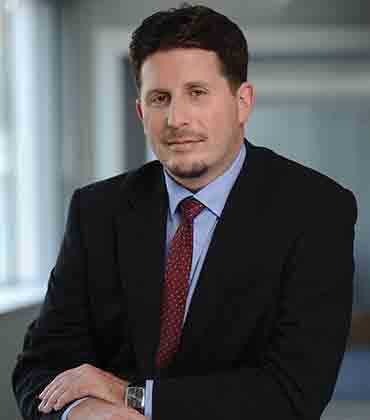
How technological advancements such as Big Data/AI etc. can enhance more personalisation in your Employer Branding Strategy?
Gabor Varjasi, Global HR Director, BP

IN FOCUS

Energy Infrastructure Delivery: European EPC Expertise
Energy EPC contractors in Europe drive integrated infrastructure development, renewable integration, regulatory alignment, and technological innovation for resilient energy systems.
Electric Machines in Europe: A New Era of Efficiency and Digital Integration
The electric rotating machine industry in Europe is transforming, found in steady, though gradual, progress due to drivers such as technology advancement, sustainability objectives, and energyefficient equipment demands.
EDITORIAL
Engineering Discipline Driving Energy Resilience
Energy infrastructure across Europe is defined by technical complexity, grid transformation, and heightened expectations for delivery certainty. In this issue of Energy Business Review Europe, the focus centres on engineering-led execution models that strengthen project reliability, accelerate renewable integration and sustain operational resilience in an increasingly volatile infrastructure environment.
A defining highlight of this issue is the cover story on Orsted [CPH: ORSTED], recognized as the Offshore Wind Company of the Year in Europe 2026. The company has shown how offshore wind can become part of reliable energy infrastructure by aligning development, engineering, construction and long-term operations across the project lifecycle. Its focus on standardized execution, predictive maintenance and supply chain coordination has helped strengthen reliability at scale and support offshore wind as a strategic part of Europe’s energy system.
Gemec, awarded as the Top Energy EPC Contractor in UK 2026, has established a disciplined delivery framework built on full lifecycle accountability. Under the leadership of Vassilis Thomas, Chief Executive Officer and Technical Director of Gemec, the company has demonstrated how integrated in-house engineering can reduce coordination risks and maintain alignment across design, procurement, construction and long-term operations. By retaining technical responsibility throughout project execution, Gemec strengthens grid readiness, minimises delays and ensures dependable energisation outcomes even under changing regulatory and operational conditions.
Industry perspectives further reinforce the importance of innovation and planning discipline. Hoffmann Peter, Senior Manager System Operations at TenneT, emphasises the urgency of advancing transmission technologies such as high-capacity direct current systems and multi-terminal grid concepts to support large-scale renewable adoption across Europe. Antony White, Client Delivery Manager - Central Delivery Team at UK Power Networks Services, highlights the growing need for resilient energy design within data centre infrastructure, underscoring the role of localised renewable generation, battery storage and microgrid integration in sustaining long-term operational stability.
As Europe accelerates its energy transition, consistent execution and forward-looking system design will remain decisive factors in delivering secure and scalable infrastructure. We invite readers to explore this issue and engage with the engineering strategies and innovations shaping the future of energy project delivery.
