
Thank you for Subscribing to Energy Business Review Weekly Brief
Traditional oil containment approaches are designed to answer a single question, “Where will the oil go if equipment fails?” Solidification Products International (SPI) goes beyond traditional containment design. Its patented systems are engineered to allow effective drainage under normal and storm conditions, remove trace oil and sheen during everyday operations, and automatically react to contain oil in the event of a catastrophic spill. For utilities and energy operators, that shift changes everything. Instead of managing water levels, chasing compliance or hoping containment holds under stress, SPI gives them something far rarer—certainty. Renowned for manufacturing industry-leading oil-spill prevention products and solutions, SPI strategically controls spills, leaks and other issues. “Many claim to achieve our standard of quality. But the reality is that delivering this high level of performance requires technology we’ve already patented and proven over decades,” says Bill Gannon, founder and president. Backed by more than 40 global patents and technologies, it has never recorded a single incident of oil escaping into the environment. Since entering commercial use in 1998, SPI has redefined what “fail-safe” truly means.
Oilfield Services
A thriving nation like the U.S. needs a thriving power supply — without it, economic expansion risks running on empty. Oil and gas will continue to do the heavy lifting, providing the backbone of the country’s energy supply through proven drilling methods. Here, CP Energy Services stands a reliable ally for securing the energy of tomorrow. The company ensures that the fracking sector operates unhindered, with increased efficiency, safety and a more sustainable footprint. This premier oilfield service and equipment rental company offers high-value post-frac completion and production solutions to supermajors as well as national and independent oil companies. The services include flowback and well-testing services, solid controls, premium threaded work strings and oilfield equipment. CP Energy Services is a portfolio company of Prospect Capital Corporation (NASDAQ: PSEC), a publicly traded business development company with $7.2 billion of total assets as of December 31, 2024. “We began with flowback services, then took it further with our Sand Commander for solid control solutions. Today, we’ve expanded our offerings to include premium threaded workstrings, delivering a comprehensive service line that keeps evolving,” says Mario Blanco, CEO. These three business lines define CP Energy Services’ core operations, with patents secured for the latter two. The Sand Commander, a refined four-phase separator, removes 99 percent of harmful gases and 95 percent of sand while transferring clean, reusable water on-site. As one of the most efficient ESG and HSE solutions available, it enhances ecofriendly completions, improves well economics, boosts safety, and optimizes flowback. CP Energy Services offers a patented thread pattern that makes its workstrings among the most durable in the industry. The FSS-247 2-3/8” and FSS-265 2-7/8” S-135 workstrings deliver 40 percent more torque and 20 percent more tensile strength, enabling easier breakouts with fewer recuts or repairs.

Oil & Gas Consulting Company
Investing in the oil and gas industry can be lucrative. But, it also involves navigating complex contracts that deal with financial terms, royalty agreements, joint ventures and productionsharing. For investors, an experienced eye by their side to take a closer look at contracts can be the difference between productive partnerships and costly legal disputes. Martindale Consultants has spent over 40 years delivering exactly this. It provides expertise in navigating joint venture agreements, investment structures and compliance requirements globally for clients ranging from individual mineral owners to national and multinational oil companies. “We approach every single project as if the money invested by the client, even in requisitioning our services, is our own,” says Roger Gann, president and CEO. Over the years, the company has diversified into even more fields like accounting, regulatory reporting and litigation support services, becoming a one-stop shop for oil and gas investors. Through leadership roles in organizations like the Council of Petroleum Accountants Societies (COPAS), the firm has also played a big role in forming best practices in oil and gas accounting. Mitigating Risk, Maximizing Value Pre-investment consulting and post-investment compliance reviews form the two major audit services Martindale provides for clients. For prospective investors, Martindale conducts thorough due diligence to highlight potential financial risks and accounting discrepancies. Post-investment, clients can rely on Martindale for detailed audits that verify billing, ensure proper revenue allocation, identify non-compliance, and provide recommendations to protect their interests. Besides audits, Martindale provides accounting services to support smaller oil and gas operators and investors who lack inhouse financial teams. The firm acts as an outsourced accounting department and handles tasks like revenue distribution, production accounting, financial reconciliation and joint interest accounting. It also offers part-time CFO and controller services for clients who require leadership but do not need full-time hires. Martindale’s service further includes regulatory reporting. It has recently expanded this division to meet rising government and tribal requirements, helping clients ensure accurate payments, navigate audits, resolve disputes and adjust reporting practices as needed. Litigation support completes Martindale’s quartet of services. Its experts offer testimony and opinions on accounting disputes, compliance matters and joint venture conflicts. They evaluate financial transactions to guarantee alignment with contract terms and provides valid legal insights. The firm’s expertise extends to revenue disputes where it helps royalty owners receive the correct payments and deductions.
CXO INSIGHTS

Integrating Environmental Stewardship in Energy Businesses
Christy Clark, Director, Environmental Management and Safety, DTE Energy [NYSE: DTE]

The Road to Efficient Procurement
Mr. Gabriel Asiunukegbe, Director of Procurement, Global Partners LP

Strategic Initiatives for a Cleaner Energy Future
Ivon Louis-Letang, Energy Manager, Eversource Energy [NYSE: ES]

Lead Testing in Schools: A Study in Planning Ahead for Compliance
Sophie James, Vice President, Water Quality & Environmental Affairs, California Water Service
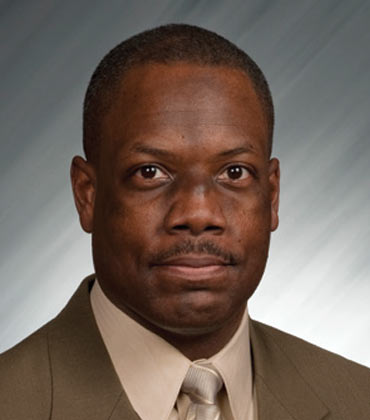
The Future of Electric Utilities
Roderick Conwell, Senior Director of Operations, The AES Corporation
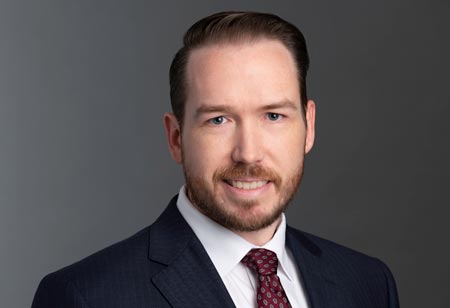

IN FOCUS
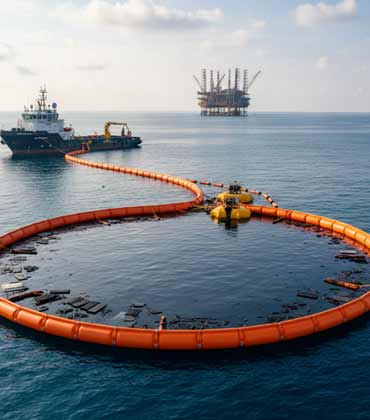

Oil Containment Systems: Strategic Shifts in Spill Control Solutions
Oil containment systems advance through rapid deployment designs, smart monitoring, and integrated response methods that strengthen spill control effectiveness.
EDITORIAL
Operational Integrity in Energy Infrastructure
Energy operators are navigating a landscape defined by environmental accountability, infrastructure resilience, and system optimization. This edition examines how engineered containment, market governance reform, and enterprise technology integration are strengthening the operational core of the energy sector.
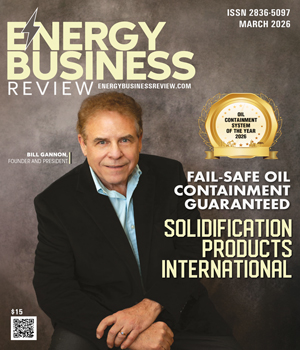
Leading this issue, Solidification Products International is recognized as Oil Containment System of the Year 2026. SPI has redefined fail-safe oil containment by engineering chemistry-driven systems that drain storm water under normal conditions while instantly solidifying hydrocarbons during a spill. Backed by more than 40 global patents and decades of field performance without a recorded environmental escape, SPI’s Petro-Barriers, Petro-Pipes, and Pump-Thru systems provide utilities with operational certainty. By exceeding discharge standards and adapting to emerging transformer fluids, SPI positions containment not as a reactive safeguard but as embedded infrastructure protection.
Beyond containment, this edition highlights structural shifts shaping energy markets and enterprise systems. Pamela Sporborg, Director of Transmission and Market Strategy at Portland General Electric, outlines governance innovations in the Western energy market designed to broaden stakeholder participation and prioritize public interest. Her perspective underscores the long-term value of transmission partnerships, interregional coordination, and virtual power plant integration in balancing affordability, reliability, and decarbonization.
Complementing this market view, David Harmon, Vice President & Chief Information Officer, at Oil States International, addresses ERP consolidation in the wake of M&A activity. He argues that strengthening the enterprise information core through rationalization and stakeholder-aligned system integration is essential for asset visibility, cybersecurity resilience, and cost discipline in a consolidating industry.
Together, these leaders and organizations reflect an energy sector advancing through engineered reliability, governance modernization, and digital consolidation. As regulatory expectations tighten and infrastructure evolves, disciplined execution will define durable success. We invite readers to explore the full insights shaping energy’s next chapter.
