

Thank you for Subscribing to Energy Business Review Weekly Brief
Nationwide Energy Partners (NEP) is transforming the energy landscape for multifamily communities by turning utilities management into a smarter, more connected experience for property owners and their residents. Its role goes beyond that of a traditional, fee-based submetering provider - it operates as a privatized energy services partner. Property owners gain a customizable, end-to-end solution that integrates utility infrastructure installation, maintenance, and management with unified resident billing. At the heart of NEP’s operations is a business model that converts energy management into an income-generating opportunity for multifamily owners. Legacy utility providers and fee-based submetering companies often operate within rigid, one-size-fits-all frameworks that leave property owners footing the bill for infrastructure installation and maintenance. Fee-based submetering providers charge residents additional fees for their services. NEP challenges this outdated model with an adaptable framework built around speed, flexibility, and accuracy, designed to meet the operational and financial needs of each community. Serving both new and existing communities, NEP’s approach brings measurable savings while introducing new revenue streams for property owners. The company enables the establishment of a commercial account for each property and installs infrastructure behind the utility provider’s master meter - often at little to no cost for owners. “We go beyond providing access to energy. NEP is reshaping ownership, efficiency and control for property owners who have long been excluded from the value chain,” says Kit Hagen, Senior Vice President of Growth and Business Development.

Top Energy Engineering Service 2025
For industrial and energy-related sectors, sustainability is a marathon run uphill. The finish line is clear, but the route is full of (un)expected budget overruns, project timeline detours, stalled execution, and strategy fatigue roadblocks. The cost of going green and staying green is often miles apart, making sustainability a balancing act between ideals and bottom lines. In these high-stakes environments, BARA Consultants steps in as a trusted coach who can turn messy realities into measurable wins. It specializes in helping industrial plants and energy operators shift to clean energy through innovative solutions in combustion, biomass, waste-to-energy, and technology development. “Our purpose is to empower every industrial plant to operate in a technically optimized and financially efficient way, enabling them to achieve their sustainability goals,” says Werner Botha, CEO. Rooted in this mission, BARA delivers tailored optimization solutions across all industrial plants, with specialized expertise in the thermochemical and power industries. It helps clients enhance their current systems and address inefficiencies by conducting process evaluations and implementing corrective measures. Whether it involves adjusting process parameters, upgrading equipment, or identifying governance issues, the company guides clients step by step, ensuring the recommended processes are both cost-effective and high-performing. BARA extends its expertise through consultative services in the biomass-to-energy sector, turning waste into valuable feedstock. The journey begins with due diligence and technology selection, followed by small-scale tests to assess feasibility and analyze feedstock quality and quantity. This thorough evaluation lays the groundwork for successful industrial-scale production. Throughout the process, BARA provides hands-on guidance to ensure every insight is translated into practical and implementable solutions. Following the evaluations, the company prepares a pro forma and economic model to recommend the most suitable technology route, like combustion, pyrolysis, or gasification. It even provides an initial consultation to guide clients forward, assessing their carbon intensity scores to enhance eligibility for tax incentives or carbon credits.

Top Metal Hydride Hydrogen Compressor Supplier 2025
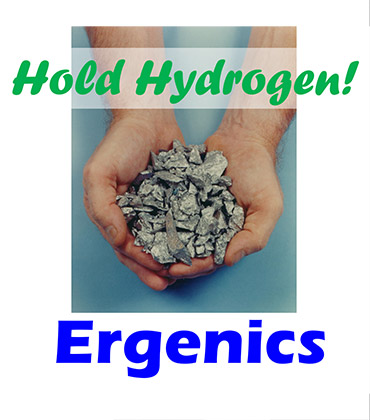
The story of Ergenics began in the late 1970s as an offshoot of INCO, a Canadian company exploring newly discovered room-temperature metal hydrides. These hydrides were remarkable for their ability to absorb hydrogen at room temperature, sparking early interest in converting gasoline engines to run on hydrogen during the oil crisis of that decade. When oil prices fell, interest in hydrides waned, but the groundwork had already been laid for innovations that would transform hydrogen storage and energy conversion. In 1980, Mark Golben, now the owner of Ergenics, joined the company and became instrumental in inventing the first hydride compressor. The systems harnessed the interaction of hydrogen with metal hydrides to form metal alloys capable of storing hydrogen more densely than in liquid form. The result was a highly efficient, compact method of hydrogen storage with transformative implications for energy use. Throughout the 1980s and 1990s, Ergenics broke new ground in fuel cell development and was among the first to attempt commercialization of PEM fuel cells, winning multimillion-dollar NASA deals along the way. The company was also the first to patent the integration of metal hydrides with fuel cells, an innovation that supported projects such as EV systems for astronauts in space. Ergenics’ credibility was further validated when its hydrogen storage units were selected for the Cassini spacecraft mission, a 25-year journey to Saturn and Titan. Unlocking the Power of Hydride Compression Ergenics has unlocked new potential in hydrogen technology through its work on hydride compression. When hydrogen-infused hydrides are heated, the pressure rises exponentially, enabling the design of staged hydride compressors that can achieve successively higher pressures with remarkable efficiency. The process mirrors the principles of a steam engine, where heat drives exponential pressure increase, but in this case, hydrogen plays the central role. This staged compression system can elevate hydrogen from just a few PSI to as high as 12,000 PSI, all driven by low-grade heat sources. Such capability represents a paradigm shift in hydrogen compression, positioning Ergenics as one of the few companies deeply advancing this technology. The implications extend far beyond traditional storage and compression, opening the door to entirely new forms of renewable energy conversion. “The compression ability of metal hydrides lets us use low-grade solar heat to pressurize hydrogen, basically turning thermal energy into stored hydrogen power,” says Golben.
CXO INSIGHTS

Safety Management System
Eric T. Belle, VP Engineering and Standards, and Jonathan DeVries, VP of Strategy and Risk Management, NiSource

Identifying the Value in Automating the Drill Floor
Jeremy Angelle, VP of Well Construction, Expro

Building an HR Department for Maximum Impact
Charlie Hoock, President - Energy Services, NAES

Integrating Environmental Stewardship in Energy Businesses
Christy Clark, Director, Environmental Management and Safety, DTE Energy [NYSE: DTE]

Compensated Fuels: Enabling Energy Transition W/O Breaking the Bank
Jonathan (J.W.) Hackett, Senior Director, Environmental Products, Global Partners LP

Evolving Energy Choices with the Customer in Mind
Leslie Myers, Product Manager, Renewables, Puget Sound Energy

The Future of Electric Utilities
Roderick Conwell, Senior Director of Operations, The AES Corporation


IN FOCUS
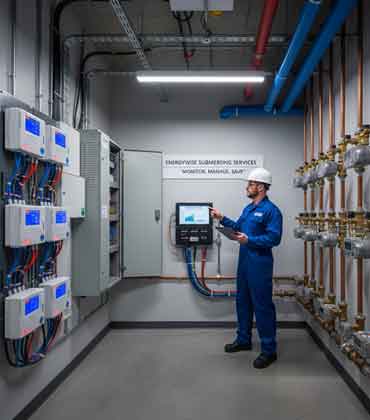
Submetering as the Backbone of Net-Zero Strategy
Submetering is transforming from a billing tool to an essential strategy for accurate sustainability measurement and accountability, driving corporate Net-Zero and ESG commitments.
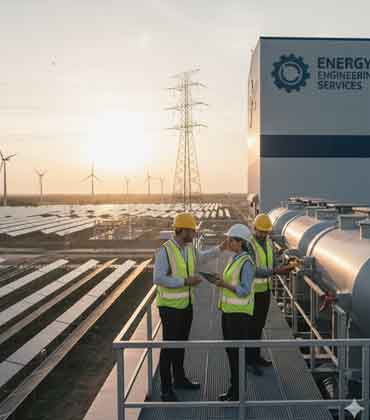
Engineering as a Service: The Next Frontier in Energy Innovation
The energy sector is shifting from traditional EPC models to agile ESPs, emphasizing digitalization, specialized expertise, and ongoing lifecycle asset optimization.
EDITORIAL
Rewiring the Intelligence Behind Every Watt
The world’s energy systems are entering an age of awareness. What once depended on constant oversight now runs on intelligence—systems that measure, learn and adapt in real time.
Among the breakthroughs leading this change are metal hydride hydrogen compressors, reshaping the way hydrogen is stored and delivered. By relying on special metal alloys that absorb and release hydrogen at controlled pressures, these systems eliminate the noise, vibration and maintenance issues associated with traditional compressors.
A similar transformation is unfolding closer to the consumer. Water and electric submetering has emerged as the quiet enabler of accountability, an unseen layer of intelligence that brings visibility to every drop and kilowatt. In office towers, industrial parks and housing complexes, smart meters are teaching users to see the true rhythm of their consumption.
At the heart of this ecosystem, the role of the energy engineering firm is being redefined. The work now extends far beyond system design or installation. Today’s engineers serve as partners in performance by integrating renewable generation, thermal recovery and data analytics into cohesive, adaptive systems. Their mission has shifted from delivering projects to creating energy strategies that endure, ensuring that progress in sustainability is guided not by compliance, but by design.
The magazine features a thought-provoking article by Sophie James, Vice President of Water Quality & Environmental Affairs at California Water Service and Moses Thompson, President at Liberty.
The publication spotlights Nationwide Energy Partners as the cover feature, recognizing its expertise in redefining multifamily energy management through private infrastructure ownership and intelligent data systems to help property owners transform traditional energy operations into adaptable, value-creating assets that elevate both community performance and resident experience.
We hope this edition offers insights that help energy innovators, engineers and sustainability leaders navigate transition, strengthen efficiency and prepare for what’s next in a world where hydrogen, smart metering and precision engineering are redefining how progress is powered.
