
Thank you for Subscribing to Energy Business Review Weekly Brief
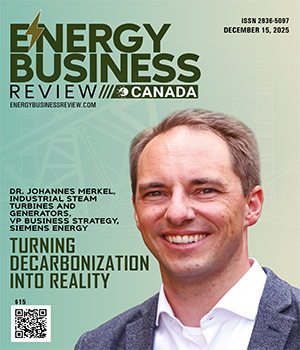
The energy industry finds itself in a unique situation. While political objectives are often a matter of debate, when it comes to the energy sector, the world is united behind one single goal: decarbonization. Such consensus is rare and offers an enormous opportunity for our industry. At the same time, it’s clear that reaching this goal requires hard work. No doubt, a lot of necessary technologies have been developed, and some of them have been implemented. Buta lot more needs to be done by all of us – suppliers, utilities, and those in politics, who are responsible for the regulatory framework. And we need to do it together! Enabling renewables: highly efficient gas-fired power plants Let’s take a closer look. At the center of global efforts to reach net zero are renewables, namely solar and wind. Their shares continuously need to be increased. By 2050, IEA World Energy Outlook foresees renewables reaching 40-70 percent of electricity generation, and even more in some countries. But renewables are only part of the story. Their supply fluctuates. Therefore, it’s necessary to supply balancing as well as dispatchable power while ensuring grid stability. Only then can the share of renewables continue to rise. So far, in many countries coal-fired power plants have been supplying balancing power and grid stability. Yes, they are being phased out. At Siemens Energy, we still believe thermal power plants to be part of the solution – gas-fired power plants, which supply dispatchable power relatively quickly. Also, they could be transformed from (L) NG to hydrogen in the future. The share of gas-fired power plants is roughly a quarter of the global power generation, and the annually added capacity is thought to be stable at 40-60 GW in most market scenarios. For instance, a new 877-MW Combined Cycle Power Plant (CCPP) with gas turbines by Siemens Energy, which is to be built in Komotini in northeastern Greece, will reduce CO2 emissions by up to 3.7 milli
Top Fuel and Propane Delivery Management Service in Canada 2025
Amid Canada’s extreme oil and gas environments, dependable service remains a rare yet critical lifeline. From deep, high-pressure gas wells to thermal operations, every site presents its own technical and environmental challenges. Servicing this diversity demands beyond equipment; it requires adaptability, experience, and an unyielding focus on safety and performance. True Canadian Energy exemplifies these qualities, delivering innovative wellhead and valve maintenance solutions for a wide range of oil and gas companies. Founded by industry veteran Douglas Schepp, the company repairs and restores critical components, producing new and remanufactured parts to save costs and minimize waste. “What sets us apart is our communication, teamwork, and ability to solve problems, honed over 35 years of serving the oil and gas industry,” says Schepp. The roots of this service-driven culture trace back to his industry journey, where decades of experience in wellhead services shaped a leadership style anchored in technology and teamwork. Complementing this foundation is Paul Lisoway, whose extensive background in wireline and well operations brings essential field expertise and operational precision. Their combined experience fuels True Canadian Energy’s integrity and innovation, providing practical solutions that include patented wellhead equipment and licensing for evolving oilfield needs. Today, this synergy enables the company to deliver responsive service across Western Canada, from Saskatchewan to northwest British Columbia. It is strengthened by acquiring assets from FMC Technologies and hiring experienced personnel to support legacy customers and expand its service capabilities..

Top Fuel and Propane Delivery Management Service in Canada 2025

Small and mid-sized fuel delivery companies have long faced a fundamental challenge: competing with major distributors that operate on advanced digital systems, while managing daily operations through spreadsheets, manual dispatch boards and endless paperwork. The company’s story began in 2014, when Ali Tavanayan, founder and CEO, was asked by a local operator to design a custom management tool. What could have been a one-time project became a broader mission: to give smaller fleets access to......
Renewable Energy Service
Investments in renewable energy play a crucial role in promoting environmental stewardship and sustainable growth of the world economy. But for renewable energy projects to be successful, they need to be well-designed and developed from origination up to the ready-to-build stage. This necessitates the involvement of an experienced energy project development service provider. This is where Electryon Power comes into the spotlight, offering excellent and efficient project development capabilities to its stakeholders and promising returns to its investors. Electryon Power is a Canadian company with a Latin America-focused renewable energy development strategy. It has established itself as the leading independent developer of utility scale solar power plants and is the first developer of large-scale green hydrogen projects in Colombia. The company seeks to leverage its exposure to Canadian investors, its managements’ track record in capital markets and its first mover advantage in the development of green hydrogen projects, to foster stakeholder collaboration and propel its projects forward. “We are dedicated to advancing in the fields of renewable power generation and green hydrogen production with well-structured and defined project development plans that can be successfully built and operated long term” says Alvaro Torres, CEO of Electryon Power. The company acknowledges the challenge of securing funding for early-stage green energy project development. Many organizations and investors shy away from the inherent risks of development, preferring to enter the sector when projects are ready for significant equity and financing at the beginning of their construction stage. However, any successful project must have a successful development story behind it; moreover, it is in the development stage where the best returns are made. Electryon Power offers an experienced management team that can de-risk the development stage of renewable projects, offering its investors exposure to a new and profitable asset class. A master in delivering well-structured and developed projects, Electryon Power offers its stakeholders feasible projects that can be built and operated for mid and long-term periods. Every project goes through three development phases: origination and conceptual development, pre-feasibility, and feasibility through Ready-to-Build.

CXO INSIGHTS
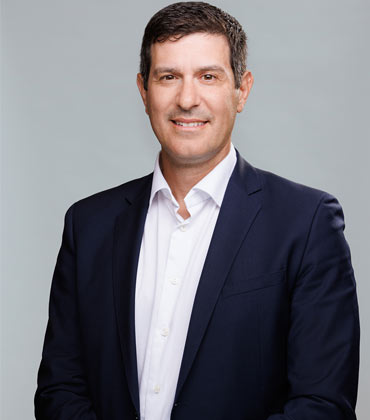
Renewable and Low-carbon Gases: A Viable Avenue towards a Cleaner Energy Future
Joe Mazza, Vice-President, Energy Supply and Resource Development, FortisBC

Fulfilling Regulatory Compliance with Technology
Brett Adamcik, System Integrity and Reliability Director, CenterPoint Energy [NYSE: CNP]

The Evolution and Integration of Renewable Energy
Jim Helvig, P.E., Vice President of Operations, Dashiell Corporation

The Consumer Choice in Accelerating the Energy Transition
Daniel Carr, Head, Grid Edge Solutions, Alectra

Advancing Hydrogen Innovation for a Sustainable Future
Samuel McDermott, Technical Manager Customer Innovation Solutions, Enbridge Gas
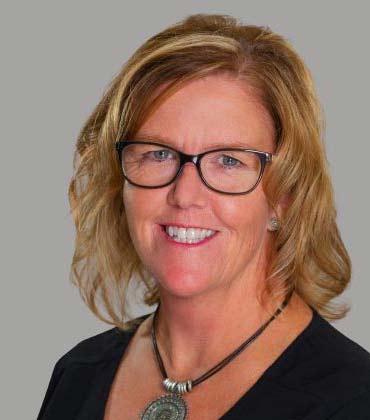
The Face of an Organization
Diana Jenkins, Manager, Customer Development, and Lauren Kriz, Marketing and Communications Specialist

Collaboration Across Multiple Sectors Can Speed the Transition to Electric Transportation
Dan Bowermaster, Head of Electric Vehicle Research (Sr. Area Manager), EPRI

IN FOCUS
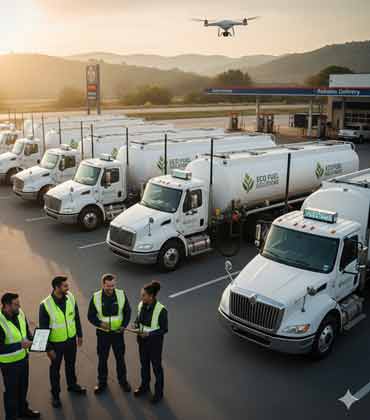
Expansion Horizons in Canada's Fuel and Propane Sector
Canada's fuel and propane delivery industry is evolving towards "Energy-as-a-Service," emphasizing digital transformation, mobile refueling, and low-carbon alternatives to enhance efficiency and sustainability.
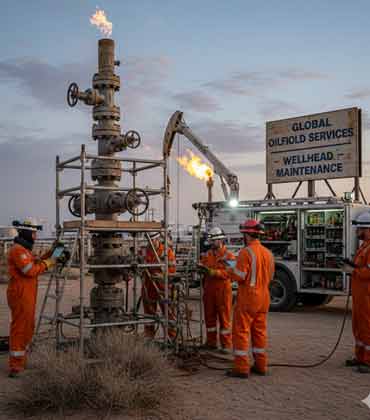
The Green Evolution of Canadian Wellhead Maintenance
Wellhead maintenance in Canada is advancing environmental sustainability through proactive practices, digital monitoring, and advanced materials, setting a global benchmark for energy-sector decarbonization.
EDITORIAL
Driving Change Innovation and Adaptation in Canada’s Oil and Gas Sector
Canada’s oil and gas wellhead maintenance and fuel/ propane delivery management markets closed 2025, marked by a strong focus on efficiency, driven by softer drilling activity, volatile prices, and heightened regulatory and decarbonization pressures. Service providers demonstrated resilience through cost discipline, automation, and a commitment to reliability in challenging operating environments.
For wellhead maintenance, the year was shaped by operators maximizing the value of existing assets as upstream capital spending and well counts declined, especially in Alberta, Saskatchewan, and British Columbia. This led to less new-field work but a greater emphasis on maintaining the integrity, uptime, and safety of producing wells. Companies responded by embracing digital monitoring, remote diagnostics, and standardized equipment platforms to minimize site visits and extend maintenance intervals.
Fuel and propane delivery management navigated unique pressures, including extreme winter conditions, driver shortages, compliance requirements, and the need to serve both urban and remote markets. Providers improved performance with advanced routing, real-time tracking, and demand forecasting tools, boosting fleet utilization and reducing missed or delayed deliveries.
Looking ahead to 2026, both sectors remain cautious yet opportunistic, anticipating modestly softer spending but potential growth from LNG-driven gas activity, export infrastructure, and ongoing demand in remote and industrial markets. Strategic priorities include deeper digitization, enhanced data integration, resilient winter logistics, and service offerings aligned with emissions reduction and tightening regulations.
In this edition, we spotlight companies and individuals who have significantly influenced the back-end of Canada’s oil and gas industry. Siemens Energy is one such company that stands out for its role in the extraction, processing, and transport of oil and gas across Canada.
We also feature insights from Emily Gambacorta, Director of Diversity, Equity & Inclusion at Central Hudson; Terence Trefiak, VP at Montrose Environmental Group. We hope that their perspectives on industry challenges and opportunities provide you with valuable guidance for more informed business decisions.
